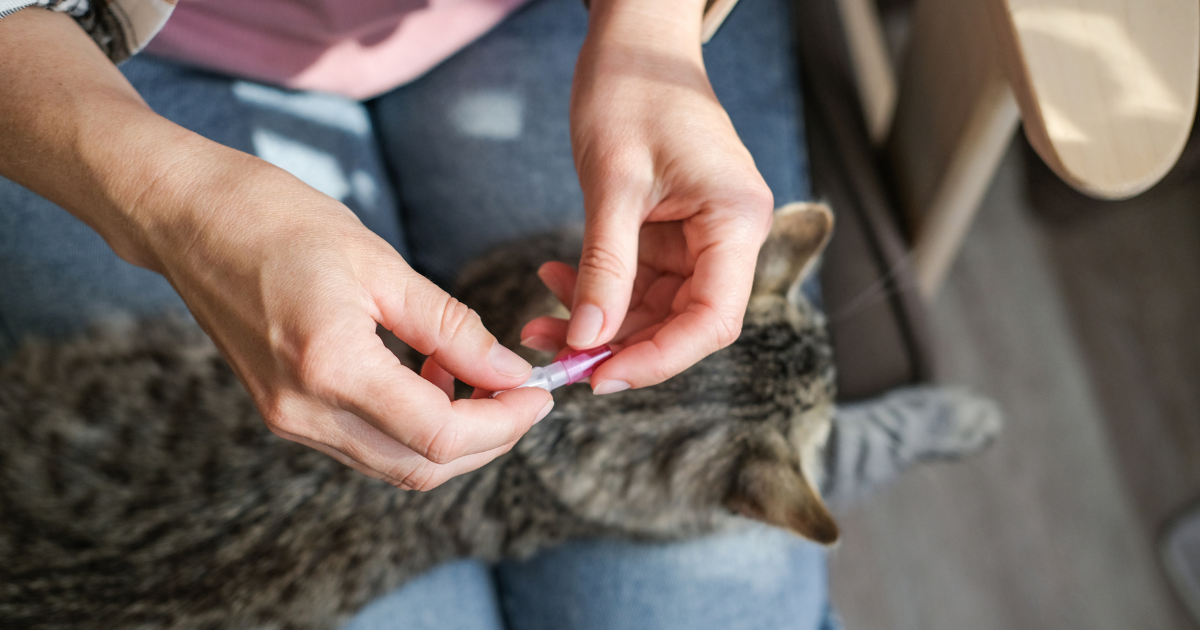
If your cat is on medication, you have probably already discovered that giving a cat a pill is unlike anything else in pet ownership. Cats are skilled at hiding pills under their tongue, waiting until you turn your back to spit them out, and making the whole process take three times longer than it should. All of that happens before you even get to the question of whether the medication was given at the right time, by the right person, in the right dose.
Here is a practical guide to managing your cat's medication schedule without losing track.
Why cat medication tracking is harder than it looks
The immediate challenge is the pill itself. Unlike dogs, cats rarely accept medication hidden in food without eventually finding it. Many cat owners spend several minutes per dose wrestling with a pill gun, a towel burrito, or a strategy they read about online that worked for someone else's cat. After all that, there is still the question of whether it actually went down.
That uncertainty compounds the tracking problem. If you are not sure whether your cat swallowed the last pill, you cannot simply give another one. Some medications are safe to re-dose; others are not. Without a log, you are guessing.
Add a second person to the equation and the risk doubles. Your partner gives the morning dose. You come home and cannot tell whether it happened. You give it again, or you skip it because you assume it was done. Neither guess is reliable.
The coordination problem
This is where most cat owners run into trouble. One person in the household is usually the "medication person," and the system works fine until that person is traveling, sick, or just out of the house when the dose is due. The other person either skips it or doubles it, not out of carelessness but because there is no shared record to check.
The same problem appears when you have a pet sitter, a family member who comes by to feed the cat, or a partner with a different work schedule. Each of them is operating without full information. The solution is not to brief everyone verbally every time. It is to have a shared log that anyone can check in the moment, from their phone, without having to ask.
Managing complex cat medication schedules
Simple schedules are manageable. These are the situations where most owners struggle.
Methimazole for hyperthyroidism is one of the most common medications in older cats, and one of the easiest to lose track of. It is typically given twice a day, which means two doses where timing and consistency matter. Many cats also receive it as a transdermal gel applied to the inner flap of the ear, alternating ears with each dose. That alternating schedule is easy to track in your head for the first week and nearly impossible after that. Without a log, most owners quickly lose track of which ear is next and how many hours it has been since the last application.
Prednisolone is prescribed for inflammatory bowel disease, asthma, allergies, and several other conditions. It often starts at a higher dose and tapers down over weeks as the condition responds. Tapering schedules are difficult to follow without a written record because the dose changes at intervals that do not map neatly onto a regular calendar.
Heart medications like atenolol or amlodipine are typically given twice a day, and timing is not flexible. Cats with hypertrophic cardiomyopathy depend on consistent medication to manage their heart rate and blood pressure. A missed dose is not a small thing.
Antibiotics need to be completed in full even after your cat seems completely recovered. With a cat who was visibly sick, that is easy to remember. A week into a two-week course, when everything seems fine, the temptation to stop is real. A tracking system shows exactly how many doses remain.
Monthly and quarterly preventatives follow the same pattern that makes heartworm and flea prevention in dogs difficult: they feel low-stakes until they are not. Revolution Plus, a common combination preventative for cats, is given monthly. Bravecto Plus protects for two months per dose. Both require you to remember not just that you gave it, but when, so you know when the next dose is due. Vaccines follow a similar rhythm: the FVRCP booster is typically annual, rabies is one to three years depending on the vaccine. Most owners track these only through the reminder card their vet sends, which is a system that fails the moment the card goes missing.
What actually helps
A written log on the refrigerator works, but only if everyone in the household uses it consistently. In practice, that means it works when everyone is home and fails exactly when you need it most.
The most reliable option is a shared digital log that anyone helping with your cat's care can update and check from their phone. When someone applies the morning methimazole, they log it immediately, including which ear. When your partner gets home and wonders whether the evening prednisolone was given, they can check without asking. When a dose is coming up, a reminder goes to both of you.
This removes the guesswork entirely. You are not relying on memory or on whoever happens to be home. The record is always current, always accurate, and always available.
A system built for pets too
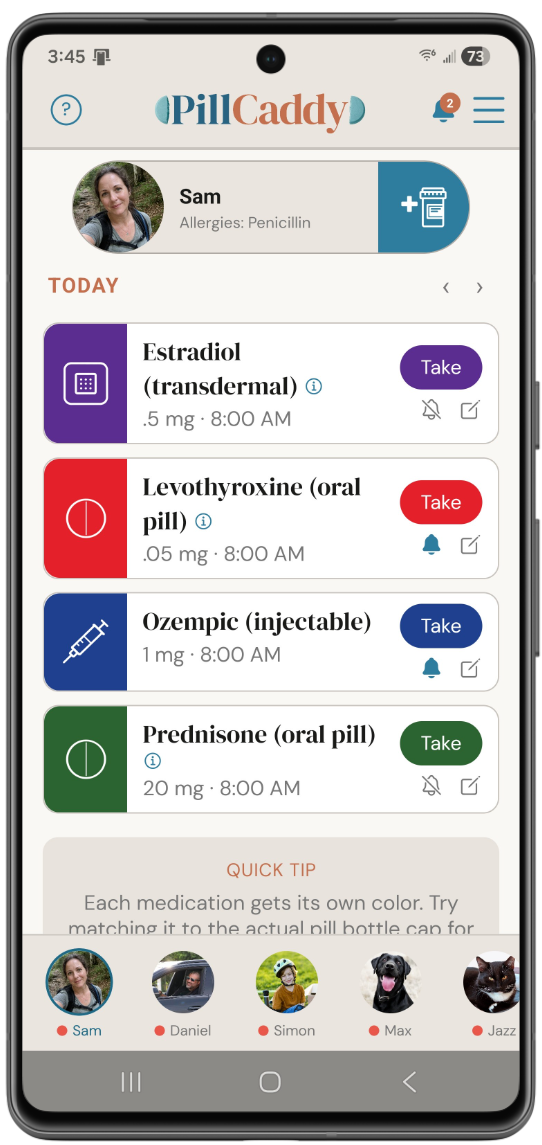
PillCaddy treats cats as full household members, not an afterthought. You can add your cat, configure all their medications with the correct schedules, including twice-daily dosing, tapering courses, and infrequent preventatives, and share access with everyone involved in their care.
When one person logs a dose, everyone else sees it immediately. Reminders go to the right people at the right time. And if you are tracking a medication with limited supply, PillCaddy will remind you before you run out.
For cats on long-term medications, or going through any course that requires consistent timing, having a shared real-time log is one of the most practical things you can do for their health.

Log it the moment it goes down
PillCaddy lets you record each dose the moment it's given, including which ear for transdermal medications, and shares that record in real time with everyone else in the household. No more uncertainty about whether the dose happened. The Essentials tier is free.
Frequently asked questions
How can I tell if my cat actually swallowed a pill?
Cats are skilled at hiding a pill and spitting it out later, which is part of why tracking matters so much. If you are unsure whether a dose went down, logging what you observed each time gives you a record to reason from instead of a guess. Whether it is safe to try again is a question for your veterinarian.
What is the best way to track my cat's twice-daily medication?
A shared digital log that records each dose the moment it is given is the most reliable approach, especially when more than one person is involved. For a transdermal medication applied to the ear, noting which ear each time keeps the alternating pattern straight. PillCaddy lets you record each dose, including which ear, and shares it with the household in real time.
My partner and I are not sure if the morning dose was given. How do we avoid this?
This uncertainty comes from not having a shared record, and the fix is a log anyone can check from their phone. When the person who gives a dose logs it immediately, no one else has to guess or ask. That keeps a dose from being skipped or repeated by accident.
How do I keep track of a tapering medication for my cat?
Tapering schedules change the dose at intervals that do not map neatly onto a regular week, which makes them hard to follow from memory. A written or app-based record that captures what was given and when keeps the pattern clear. The taper schedule itself should come from your veterinarian.
How do I remember monthly or quarterly preventatives for my cat?
Preventatives feel low-stakes until a dose is missed, so a system that stores the schedule and reminds you before the next one is due works better than a vet reminder card alone. Recording when you gave the last dose tells you when the next one is due. PillCaddy will remind you before a recurring dose comes up.
Can I track my cat's medications and my family's in the same place?
Yes. PillCaddy treats cats as full household members, so your cat's medications live in the same shared system as everyone else's. Everyone involved in the cat's care can see the log and the reminders. That shared visibility is what removes the coordination problem.